
A.I.D.A (2023-2024)
Emotional education project as a strategy for preventing drug use in primary school children.
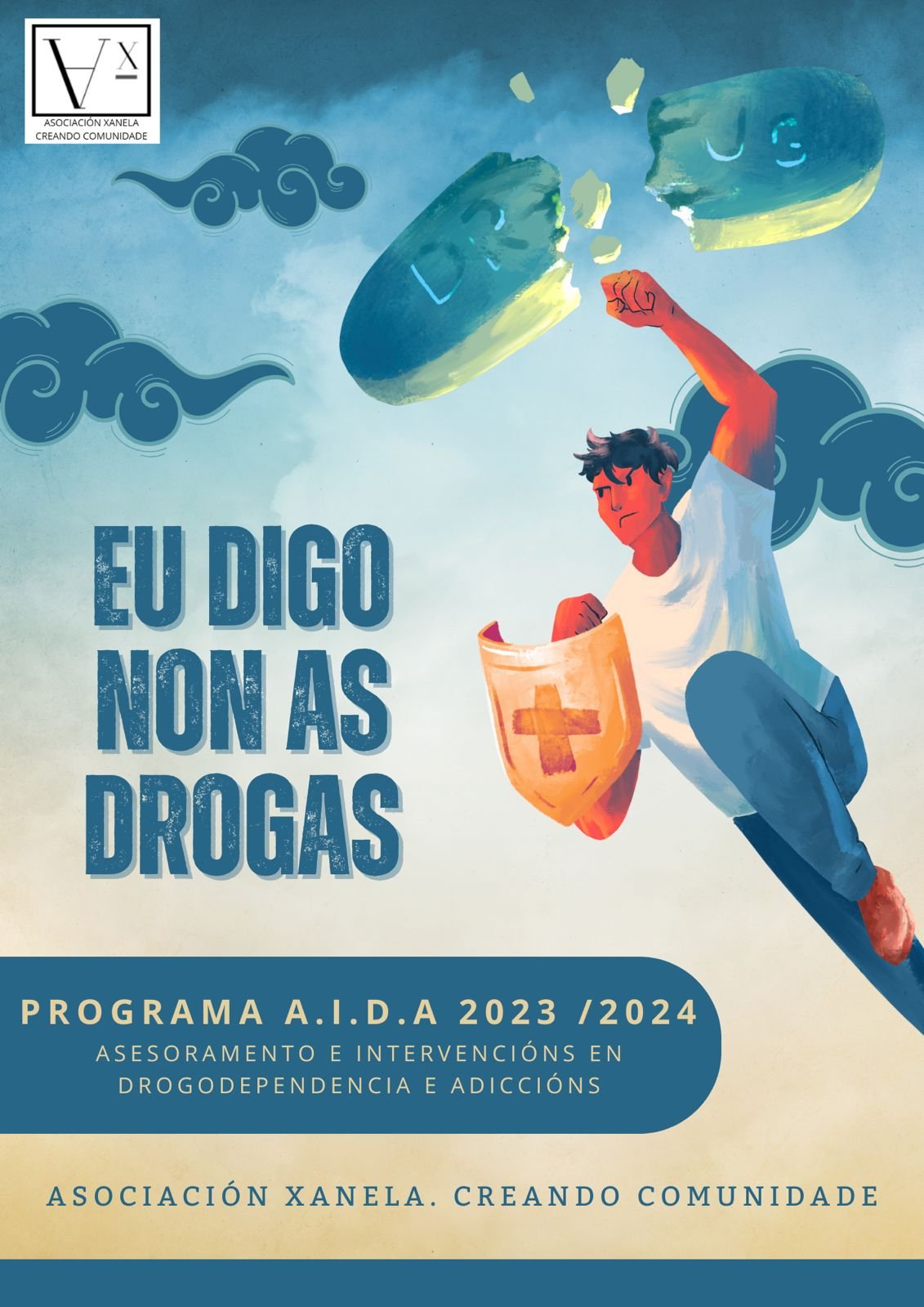
This program is composed of different projects aimed at prevention and intervention from a preventive basis in the field of drug addiction. It began to be implemented during the 2023-2024 academic year and continues its implementation in the 2024-2025 academic year. This is a program made up of four different projects, in which the target population is cascaded (in such a way that first we work with the youngest, then adolescents, and then with university students and, finally, with adults. Therefore, in 2023-2024 we will address two and in 2024-2025 we will close the following two. This way of approaching the program is based on the philosophy behind the association: we work for the community, taking care, as a priority, of future generations.
First, we carried out an emotional education project as a drug use prevention strategy with primary school children. Second, we proposed a training project for adolescents on healthy leisure alternatives. Third, we will implement a metacognition and self-analysis project in substance abuse with university students. Finally, we will carry out a dissemination project for families, aimed at creating a safe and trusting space at home and for them to constitute a support group regarding the field of drug addictions.
Emotional education project as a strategy for preventing drug use in primary school children.
Considering the relationship between the difficulty in managing and stabilizing the emotional state and addictions, we propose an emotional education program for primary school children, in order to instruct them to understand the origin of their emotions, as well as to give them tools to channel them and improve the management of their feelings. Childhood is a key time to learn to regulate emotions, since it is at this stage of development that children begin to learn important emotional skills. During childhood, the brain is constantly developing and children are learning to process and understand the world around them. Learning to identify emotions, as well as to regulate and control them, can have a very significant impact on the prevention of addictions. It was carried out in the municipality of Vedra e Negreira.
The general objectives of this project are:
- Reduce risk factors and enhance protective factors through emotional management.
- Promote the development of emotional skills in children to prevent drug use and other addictions.
- Promote the psychological and emotional well-being of children to prevent risky behaviors such as drug use.
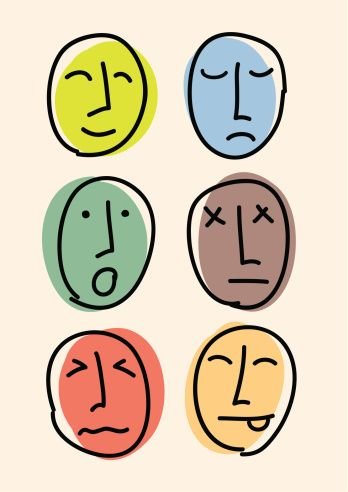
1. Introduction to emotions.
In this activity, after obtaining the initial level of the students through the initial assessment questionnaire, a training talk was held that expanded and reinforced the existing knowledge of the students present about emotions, as well as providing new concepts and questions for the students. This talk was about emotional education and its relationship with drug use. Finally, a brief debate was held on the given questions, which allowed the students to reflect and internalize knowledge.
The objectives were:
- Raise awareness about the importance of emotional education and how it can help make healthy and positive decisions.
- Educate about the negative effects that drug use can have on health, emotional well-being and the future.
- Promote the ability of children to recognize and manage their emotions, as well as to make conscious and healthy decisions.
- Provide a safe space in which children can talk about their concerns, experiences and questions related to emotional education and drug use.
.
2. Guess the combination.
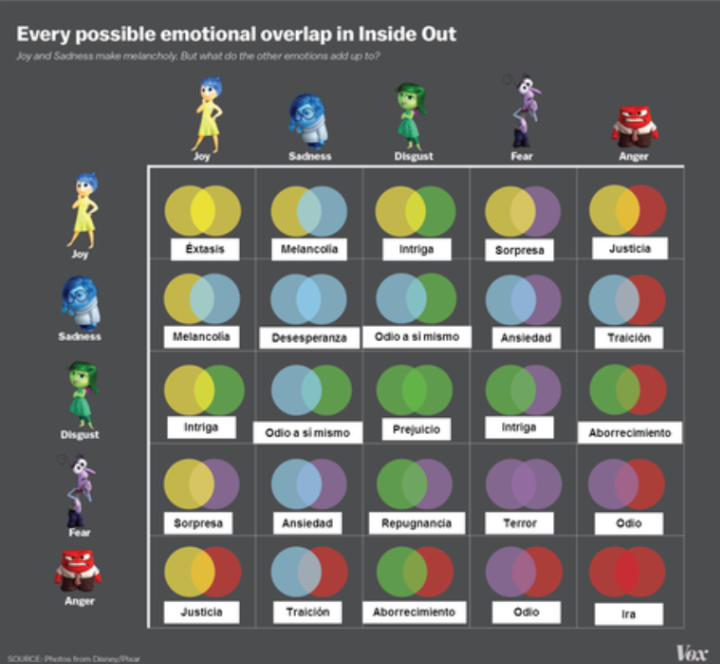
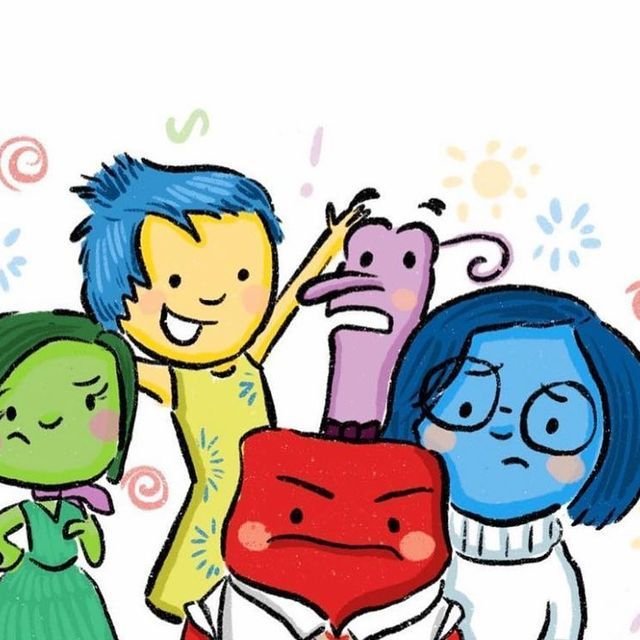
In this activity, the students were asked to go a step further and delve into the world of primary and secondary emotions. First, a fragment of the film “Inside Out” was shown. https://www.youtube.com/watch?v=83MzL3YGR3M
This fragment contains explanations written by psychologists that accompany the images in the video, and that deal with the importance of emotional states (thinking and doing are influenced by feeling, emotions influence thinking by conditioning what we remember and what we pay attention to and our behavior by activating or depressing us, these can have an external (events) or internal (thoughts) origin…)
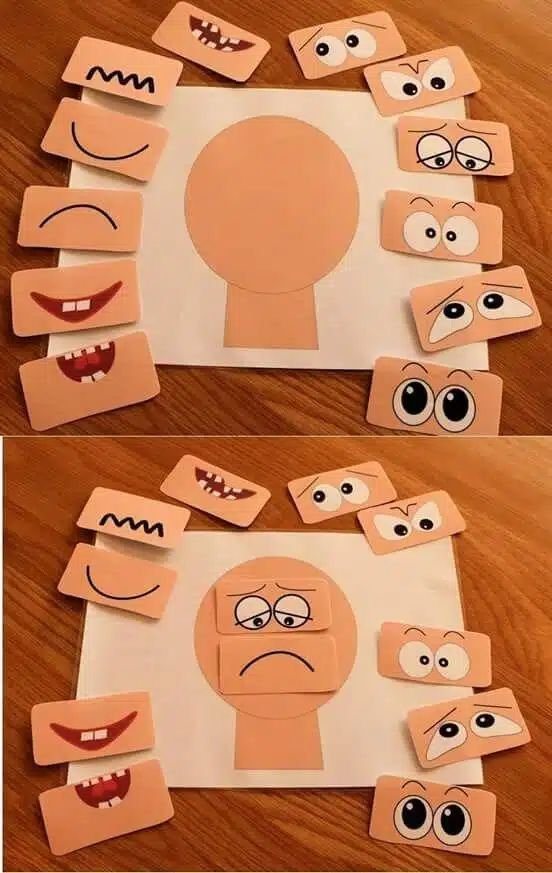
Later, to carry out the activity, the emotional overlap graph (primary and secondary emotions) from this film was presented. Games and emotion cards were made with this material.
3. Debunking myths.
This activity involves debunking myths about drugs, which is directly related to emotional education because it involves exploring the beliefs and attitudes that people have about drugs and how these beliefs may be based on myths rather than facts. By identifying and challenging these myths, greater emotional awareness can be fostered and children’s ability to understand the risks associated with drug use can be improved.
The activity can also be effective because it allows children to explore their emotions around drugs and learn how to express their feelings effectively. This can be especially important for children who may feel uncomfortable or embarrassed talking about it and need a safe and supportive environment to explore their feelings and emotions around drugs.
Some of the myths that can be debunked are:
- Drugs are only dangerous if you use them over a long period of time.
- Drugs make you more confident in yourself.
- Drugs help you express your emotions.
- Drugs increase creativity.
- Drugs only affect addicts.
- Marijuana is not addictive.
- Alcohol is less harmful than other drugs.
.
4. The emotions game.
To develop this activity, people were divided into groups of 4 or 5. Then, each group was assigned one of the following categories: “neutral feeling”, “negative feeling” and “positive follow-up”. For each of the categories, a series of cards were prepared in advance. Then, the coordinator held up a card, which included phrases such as: “Which movie caused you the most negative feelings? What feelings? Why?”; “Tell us about the situation in which you experienced the most positive feelings. What feelings? Why?”, etc. In addition, the card was rotated so that everyone could participate, including the coordinators.
This activity has an indirect relationship with the prevention of drug use, since it can help children develop emotional skills and recognize and express their feelings appropriately. Drug use can often be an inappropriate way to deal with negative feelings, such as anxiety, stress, or sadness, so if they learn to recognize and manage their emotions in a healthy way, they may be less likely to resort to drug use to cope with difficult situations.
In addition, the fact of exposing themselves to their peers to talk openly about their emotions can help create a supportive environment, where they feel comfortable discussing their problems and concerns without fear of judgment or stigma. Something that is crucial to preventing drug use, helping them feel more confident and socially connected.

5. Peer pressure.
This session consisted of several activities. First, the Asch experiment was carried out (10 min) to start the session. 8 volunteers were asked to carry it out, the remaining attendees acted as observers. One of the 8 volunteers was the test subject and could not hear the instructions. The experiment consists of comparing bars. First, three bars of different sizes (A, B and C) are presented, and they are asked to compare their length with another reference bar (X) and to indicate which of the 3 bars is the same length as the reference bar. The first 3 times the “buddies” must answer correctly, but in a 4th, they must give incorrect answers (it is essential that the “test subject” makes his decision after listening to the rest of the group members).
Next, the previous activity was used to explain what peer pressure is and the different responses that can be given: assertive, aggressive and passive.
Finally, a reflection exercise was carried out in the face of a situation related to peer pressure and alcohol consumption. First, a situation was presented in which two friends try to convince another to go with them for a beer. Participants were then asked to give an example of each type of response (assertive, aggressive and passive) to the situation. They were then asked to answer the following questions: What do you think about this situation? How does this situation make you feel? Have you ever been in a situation similar to this? Do you think the protagonist is facing peer pressure? Why?
6. Truth or Dare.
First, the students, in a large room, sit in a circle. In the middle are the educators and we have 6 cards corresponding to 6 families of emotions: fear, joy, sadness, surprise, anger and love. On each card, 3 truths and 3 proofs from each of the families of emotions have been written (see example at the end of the explanation). Each student, in order, rolls a die, and according to the number they get, it will correspond to a family of emotions (1: fear, 2: joy, 3: sadness… etc). Each person must choose between truth or proof, which will correspond to a question or a challenge, and according to their choice, one of each card will be read (we can cross out those that have been asked so as not to repeat them). If the person in question does the test well or answers the question correctly, they earn a point. The person who reaches 5 points will win the game.
The objectives are:
- Recognize, observe and identify one’s own emotions and those of others
- Promote cooperation and motivation in the group.
- Expand vocabulary on the family of emotions.
- Deeply study positive and negative emotions.
- Foster group cohesion.
7. Yoga Class.
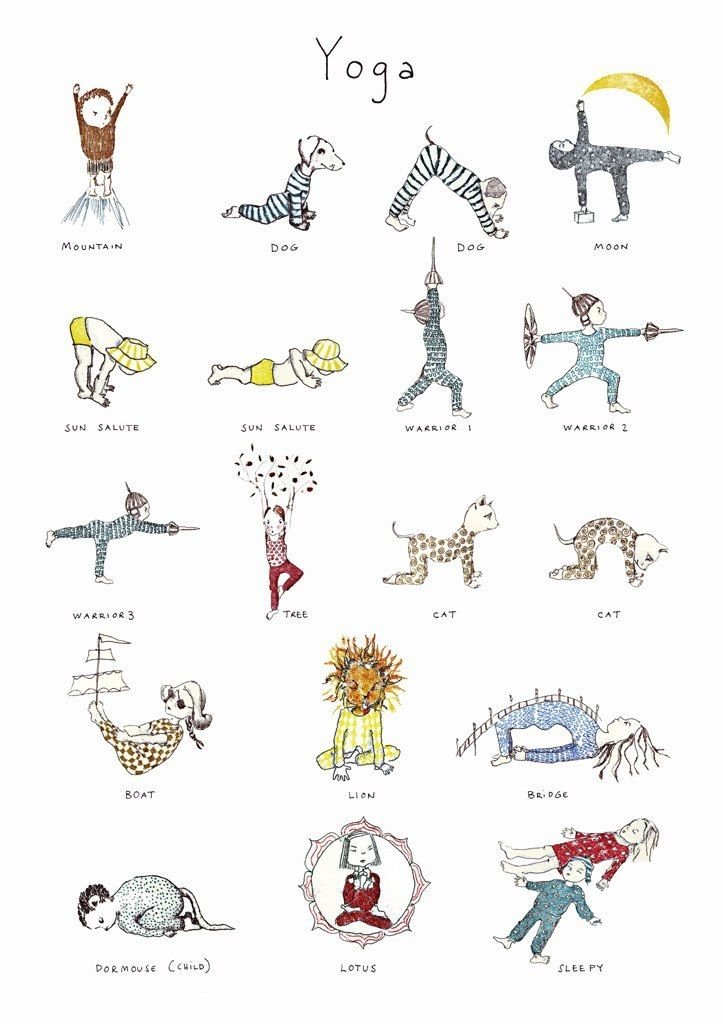
In this activity, a complete yoga class is held, led by a professional. Yoga is a practice that connects the body with the breathing of each individual and even, in some activities, with the breathing of other classmates. In this case, Hatha Yoga was used, suitable for all ages and with a slow and easy process for beginners. At the beginning and end of the class, questions were asked about the knowledge of Yoga and the results obtained at the end after doing some stretches and two or three Yoga blocks depending on the time.
The objectives are:
- Channel the breath to promote self-control and the connection between mind and body.
- Reduce stress and anxiety levels to avoid resorting to drugs or alcohol.
- Teach meditation techniques.
- Manage impulse control (anger, frustration, rage, etc.).

8. Bottle of qualities.
In the first of the sessions, each student was asked to bring a bottle or jar decorated to their liking, with their name written on the outside so that it was visible to their classmates, and they left it in the classroom. Throughout all the sessions, the members of the group wrote a quality, a beautiful moment, a positive experience that they remember, a gesture that they liked… of each of their classmates, and put it in the corresponding bottle or jar. Thus, the jars were filled as the weeks passed with different contributions.
At the end of all the sessions, each person opened their bottle or jar of qualities and read all the positive things that they had written. This is an activity that increased the students’ self-esteem and their confidence in themselves, in addition to promoting cohesion and emotional bonds in the group.
The objectives are:
- To promote self-acceptance, so that children do not seek validation in addictive substances.
- To learn to recognize and accept one’s own strengths and as a tool to avoid peer pressure towards drug use.
- To develop a positive attitude towards oneself and others.

9. Kahoot and emotions.
Kahoot: The Kahoot.com website was used to create a learning game in the form of a quiz on basic concepts covered throughout the project, both on emotional education and on drug use and its relationship.
Quiz: As a finale, the quiz provided in the first session was returned for them to fill it out again, so that we can observe the knowledge that this project provided to the students.
The objectives are:
- Clarify concepts.
- Contrast knowledge with the beginning of the project.
administracion@asociacionxanela.gal
Teléfono
(34) 620087248
Dirección
Santiago de Compostela, Galicia.
Redes sociais
Colaboracións